A college campus is one of the richest audiences a brand can reach in one place: thousands of young people, concentrated, social, influential, and forming the brand habits they will carry for years. It is also the hardest crowd to impress. This is the most advertised-to, most ad-skeptical generation there has ever been. They scroll past a billboard the way they scroll past a feed, and they can smell a brand trying too hard from across the quad. A campus activation that treats Gen Z like a captive audience to be broadcast at will be ignored politely and forgotten instantly. Here is how to run one they actually stop for.
Why campus activation works when it is done right
The reason brands keep coming to campuses is sound. Students try new things, they talk constantly, and what one group adopts spreads across the campus fast. Reach them with something genuinely good and you do not only get trial; you get word of mouth through the most connected social network there is. The catch is that the same connectedness punishes anything fake, boring or try-hard just as fast. Campus is a high-reward, high-judgment environment. The upside is real, and so is the risk of being the brand everyone screenshots to laugh at.
Give them something to do, not something to watch
The first rule is participation. Gen Z scrolls past things to watch and stops for things to do. A banner, a stall with pamphlets, a promoter reciting a script: all skippable. An activity they can take part in, a challenge, a game, a creation, a competition, something physical and a little bit fun, earns attention because it asks for involvement rather than just eyeballs. The question to design around is not what do we want to tell them, but what do we want them to do. Build the activation around an action, and the brand rides along with the experience instead of begging for a glance.
Make it worth posting, because they will
This audience documents its life. If your activation gives them something genuinely worth posting, a moment that looks good, feels good, or is funny, they will put it on their feeds, and that is reach you did not pay for, carrying the credibility of a friend rather than a brand. So design a moment that is share-worthy on its own merits, not a forced hashtag wall nobody wants to stand in front of. The test is simple and brutal: would a student post this without being asked or bribed? If yes, the activation has a second life online. If no, no amount of prompting will save it.
Be real, because they can smell the opposite
Gen Z has a finely tuned radar for inauthenticity, and campus is where it is sharpest. Corporate language, forced slang, a brand pretending to be younger or cooler than it is: all of it reads as cringe and does active damage. The brands that land are the ones comfortable being themselves, talking straight, not trying to borrow a youth voice they do not own. Respect the audience’s intelligence. A brand that is honest and a little self-aware beats one performing a version of youth culture it clearly learned from a deck. Trying too hard is the fastest way to lose this room.
Fit the campus, do not fight it
A campus has its own rhythm, spaces and rules, and an activation that ignores them is dead on arrival. Timing matters: reach students between classes, at lunch, during fests and events, not in the middle of a lecture block when the quad is empty. Place matters: the canteen, the main gate, the hangout spots, wherever energy already gathers. And permission matters: the activation has to work with the college administration, not around it, because a drive that annoys the authorities gets shut down and takes the brand’s reputation with it. Fit the activation into the campus’s flow and it feels welcome. Impose it and it feels like an intrusion.
Give a real reason to engage, beyond a free thing
Free stuff gets a crowd, but a crowd is not the goal; the right engagement is. A giveaway with no connection to the brand attracts people who want the freebie and nothing else, and they vanish the moment the stock runs out, having formed no link to the product at all. The stronger move is to tie the value to a genuine brand experience: a sample worth trying, a product worth using, a reward earned through the activity rather than handed out at random. The aim is for students to leave having actually experienced the brand and had a good time doing it, rather than clutching a free pen they will lose by evening.
The idea has to do the work, not the budget
A big budget does not buy attention on campus; a good idea does. Students have seen expensive setups that bored them and simple ones that pulled a crowd all day, and they do not reward spend, they reward relevance and fun. This is good news for brands, because it means the deciding factor is the concept, not the cheque. Before planning the stage, the props and the giveaways, settle the one thing the activation is actually about: the single idea a student would describe to a friend in one sentence. If that idea is genuinely interesting to a nineteen-year-old, the activation has a chance. If it is only interesting to the brand, no production value will rescue it.
What a scroll-past activation looks like
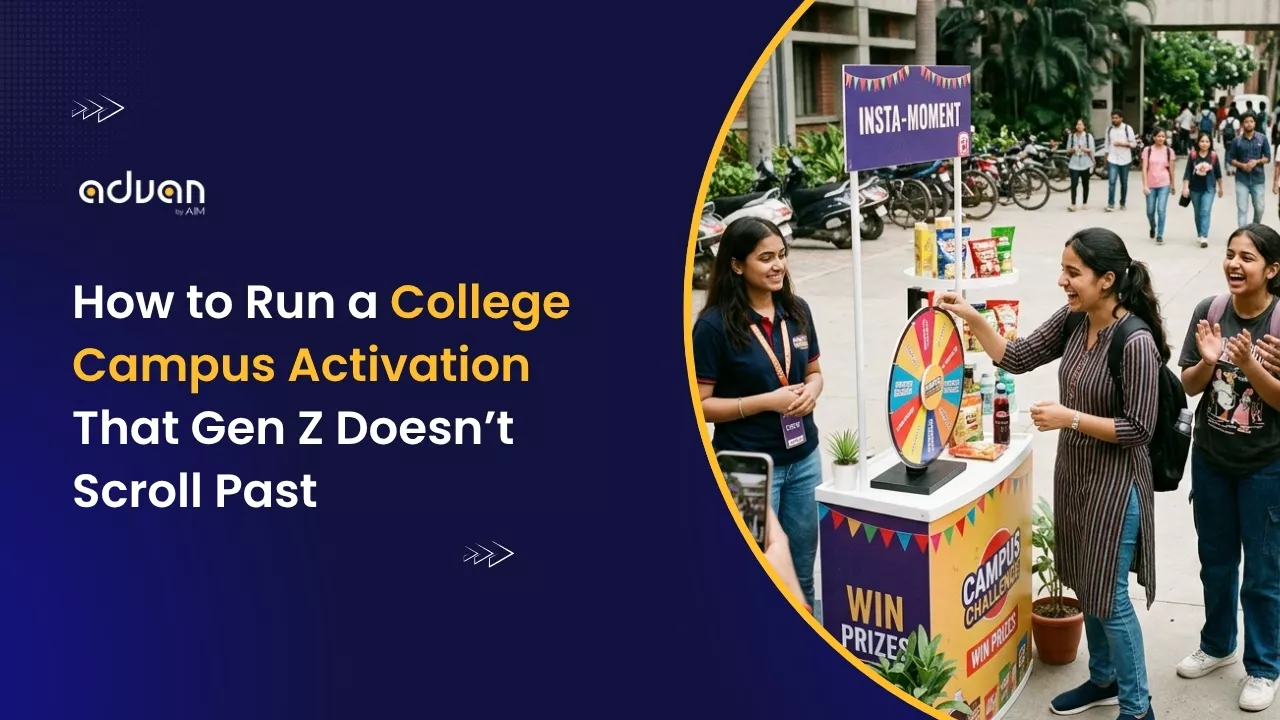
It helps to know the failure mode. The activation Gen Z ignores is usually some version of the same thing: a branded stall, a banner with the logo and a slogan, a promoter handing out flyers and reciting benefits, maybe a spin-the-wheel for a discount nobody wanted. It is set up to talk at students, offers them nothing to do, and asks for attention without earning it. Everyone has walked past a hundred of these, which is exactly why they walk past this one too. If your plan can be described as a stall with some branding and a giveaway, you have designed a scroll-past. The fix is to go back to the single question that matters: what do we want them to do, and would they actually want to do it?
Capture the moment so it keeps working
A campus activation that ends when the day ends has thrown away half its value. Capture who engaged, through an opt-in, a sign-up, a follow, a code, so the brand can continue the relationship with students who showed interest, and can measure what the activation actually produced. Gen Z will trade a contact detail for something they genuinely want, so give them a reason to stay connected. The activation is the start of a relationship with a future customer, not a one-day event, and the brands that capture and continue it get years of value from a single good afternoon on campus.
How advan runs a campus activation
At advan, a college campus activation is built around participation, authenticity and the campus’s own rhythm, not around broadcasting at students. That means designing an activity students want to join, a moment worth sharing on their own feeds, and a genuine brand experience rather than a random giveaway, all timed and placed to fit how the campus actually moves and run with the administration rather than against it. We capture who engaged so the brand can continue the relationship and measure the result, because a campus activation is an investment in a future customer, not a one-day stunt. The goal is simple: be the brand students stop for, not the one they scroll past.
Frequently asked questions
What makes a college campus activation successful?
Participation over broadcast: an activity students want to join rather than an ad to watch, a moment worth sharing on their own feeds, genuine authenticity, fit with the campus rhythm and administration, and a real brand experience instead of a random giveaway, with engagement captured so it keeps working.
Why is Gen Z hard to reach with campus activations?
Because they are the most advertised-to and most ad-skeptical generation, with a sharp radar for anything fake or try-hard. They scroll past broadcasts and stop only for things they can take part in or genuinely want to share, so forced slang and corporate messaging actively backfire.
Should a campus activation give away free products?
Free items draw a crowd, but a crowd is not the goal. Tie the value to a genuine brand experience, a sample worth trying or a reward earned through the activity, so students leave having actually experienced the brand, rather than holding a freebie they forget by evening.
How do you measure a college campus activation?
Capture who engaged through an opt-in, sign-up, follow or code, so the brand can continue the relationship and track what the activation produced, from trials to follow-on sales. Gen Z will share a contact detail for something they genuinely want, which makes the result measurable.