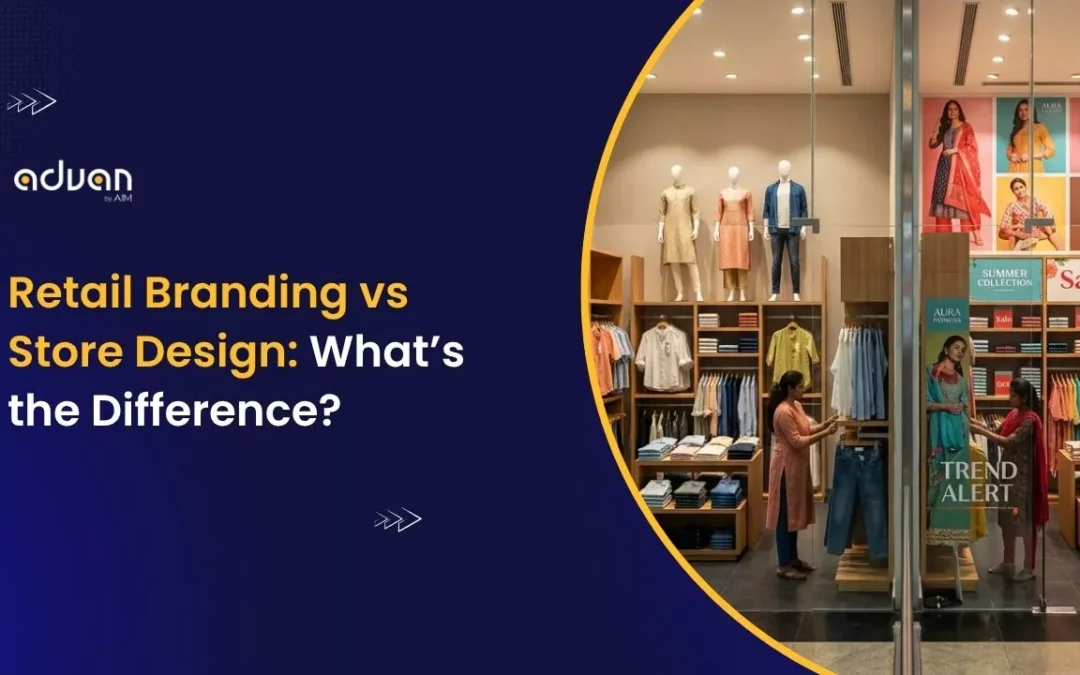

Stand across the road from your own store for ten minutes sometime. Watch the pavement, not the window. You will see people approach, and you will catch the exact moment their eyes flick up, register something, and drop back to the phone.
That flick is the whole job. It lasts about three seconds and it decides everything.
Most windows lose it. They are beautiful, they are busy, and they say nothing fast enough. The mannequin is styled, the props are perfect, and the person who was going to buy something walked on.
A retail store window has one job, and looking nice is not it
A window should make the right person stop, understand one thing, and want to come in. Looking good is how it does that job. It is not the job itself. When a display wins compliments and the walk-in count does not move, the window failed, however lovely the photograph was.
Given the choice, I will take a plain display that pulls twenty people through the door over a sculpture that everyone photographs and nobody enters.
The three-second test
Before you approve any design, do this. Print it, stand twenty feet back, look at it for three seconds, then look away and say out loud what you saw.
If you cannot name the product and the reason, the shopper will not either, and they are giving it less attention than you just did. This one test kills more bad windows than any review meeting, because it removes the thing that ruins window design: you have been staring at the file for two weeks and you can read it instantly. The person on the pavement has never seen it before and is not trying.
One idea. Not three.
The fastest way to kill a window is to put everything in it. New collection, festive offer, brand story, hero product, all fighting inside one pane of glass. A shopper at walking pace resolves one thing. Give them one.
Pick the product. Pick the reason. Everything else in that window exists to point at those two. Walk down any high street and count the windows trying to say four things at once. Then try to describe any of them a minute later.
Who exactly are you trying to stop with your window display?
Not everyone. If your buyer is a mother with a toddler in tow, the window that stops her looks nothing like the one that stops a college student on the same street. Try to stop both and you stop neither.
So name the person before the design starts. Their eye level. Their walking speed. What they came to this street for in the first place. A window aimed at everybody is aimed at nobody.
The hero, and the props that keep quiet
Every window that works has one hero and a supporting cast that knows its place. The product sits in the sightline, at eye level, lit. The props frame it. They should never win.
I have seen windows where the set design was genuinely gorgeous and you could not tell what was for sale. The creative team was proud of it. The store manager was not, because people kept walking in to ask what the shop sold.
Lighting is half the display, and it is the half that gets skipped
A window is a different object at 11am and at 8pm. At noon the glass turns into a mirror and your display competes with a reflection of the traffic behind the shopper. After dark, a lit window is the brightest thing on the street, and that is when it does its best work.
So design for both. Check the glare. Light the hero rather than the whole box. And go stand outside at the hours your buyer actually walks past, because the render was made under perfect studio light and the street is not a studio.
Give them a reason to take the next step
A window that only admires itself leaves the shopper with nothing to do. Something has to make walking in the obvious next move: a price that surprises them, a new arrival, a demonstration, an offer with an end date.
The window is the ad. The door is the click. And keep the step small. A shopper will cross a threshold for a look. They will not cross it for a commitment.
Design for the glass you have, and for every store
The window in your flagship is not the window in the high-street shop with a pillar through the middle and half the height. So design a system rather than a showpiece: a kit that adapts to formats, ships flat, and can be installed correctly by people who are not designers.
Skip that and you get what most retail networks have. One brilliant window, and thirty approximations of it.
Change the window display, or it disappears
People stop seeing a window that has not moved in six months. The regulars on that street filed it under furniture weeks ago. Changeovers are not vanity spend. They are what keeps the display inside the field of view.
And go check what is actually standing there
Here is the unglamorous part nobody briefs for. Somewhere between your design file and the shop floor, a staff member moves a mannequin to reach the stockroom door, a prop breaks and quietly does not get replaced, and a poster curls in the afternoon sun.
So ask for dated photos. Walk the stores, or have someone walk them for you. A display you designed and never verified is a display you are guessing about.
Then measure the impact
Walk-ins are the honest number. Count them the week before the changeover and the week after. Watch dwell at the glass if you have a way to. If a display cannot move a walk-in count, it was decoration, and it is fine to say so and try the next idea. Testing is cheap. Guessing is what costs money. One more thing worth doing: ask the staff. They stand behind that glass all day. They can tell you which display made people point, and which one made them walk in asking where the entrance was.
A window that sells itself is not magic. It is one idea, aimed at one person, lit properly, with a reason to come in, built to fit every store and checked after it goes up. Get those right and the glass starts working for you before anyone on your team says hello. The rest is craft, and craft can be planned.
advan by AIM designs and installs retail window displays and in-store visual merchandising as a system: one idea built around your buyer, adapted to every store format, fabricated and installed to a standard, with dated proof of what is actually up. A window has to survive the street before it can sell on it.