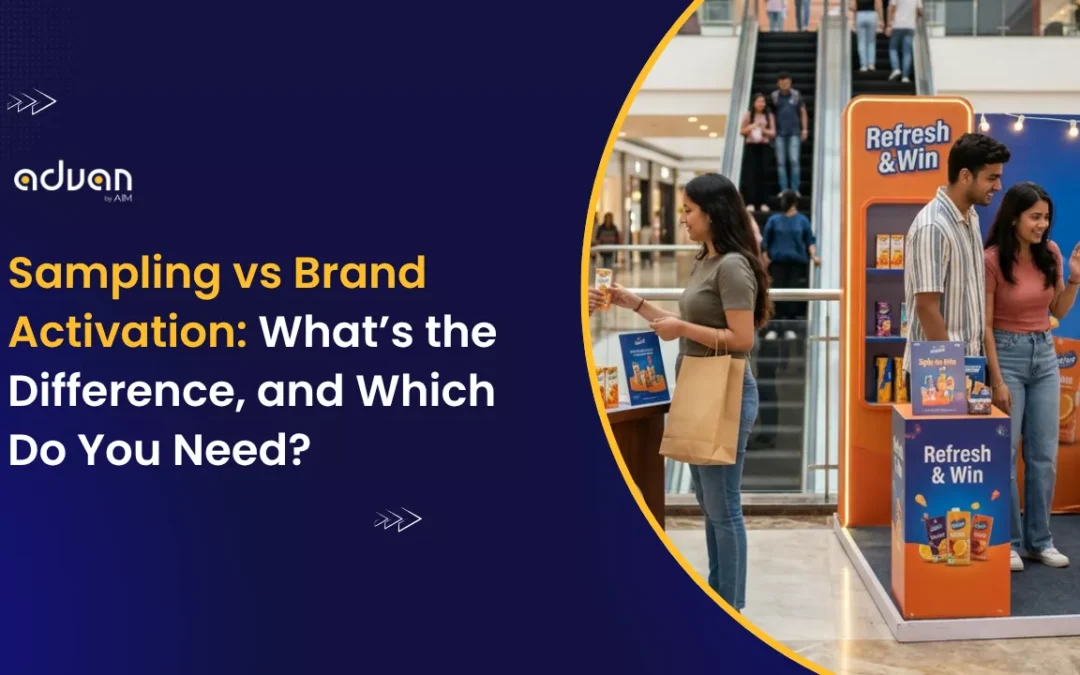

Here’s where the money actually goes. A mall activation looks busy, the photos look packed, and then someone in the sales review asks the quiet question: were any of those people our buyers? Too often the honest answer is no. A mall is full of people on timepass. Families out for the evening, teenagers killing an hour, couples window-shopping. A big, high-footfall booth pulls all of them. The lakhs get spent, the crowd shows up, and almost none of it was your buyer. The fix has nothing to do with booth size. It’s about choosing the mall, the zone, the timing, and a hook that lets the right slice of that crowd find you.
Mall activation is one of the most expensive things a brand can do on ground. Add the stall, the fabrication, the promoters, the permissions and the creative, and you’re into lakhs before a single sample leaves the table. So the number that decides whether the money worked isn’t footfall. It’s how many of the right people showed up.
Key insight: A mall gives you a crowd, not an audience. The budget starts leaking the moment you plan for the busiest spot instead of the spot, the timing and the hook that pull your buyer out of the bheed.
Where the money actually leaks
Most wasted mall-activation budget leaks from the same few places. They are easy to miss, because the activation still looks successful in the photos.
| Where the budget leaks | What it looks like on the day | How to plug it |
|---|---|---|
| Wrong mall | A famous, high-footfall mall whose shoppers are not your buyers | Pick the mall by shopper profile, not by fame or footfall |
| Wrong zone | A booth by the entrance or food court catching everyone | Place it near the category your buyer already shops |
| Wrong timing | A weekend-evening crowd out for timepass | Match the day and hour to when your buyer actually shops |
| No filter | A game or giveaway that pulls the whole crowd | Design a hook only your buyer will stop for |
| No qualification | Footfall counted, buyers unknown | Capture who engaged with a QR opt-in and a two-line profile |
| No measurement | A report full of photos and a headcount | Track engaged to interested to purchase, beyond the headcount |
Notice the pattern. Every leak is a decision made for volume instead of fit. Fix the decisions and the same budget starts meeting buyers.
Why the wrong crowd shows up in the first place
Two things quietly push a mall activation toward the wrong crowd.
The first is that footfall is easy to sell and easy to count. A vendor can promise a lakh of footfall and show you a busy photo to prove it. Buyer-fit is harder to promise, so it drops out of the plan. What gets measured gets chased, and footfall is what gets measured.
The second is that malls are built for browsing, not for buying your category. The default crowd is there for food, a walk, and timepass. Unless your activation gives the right person a specific reason to stop, you’re renting attention from everyone and converting almost no one.
How to stop it
You don’t need a smaller budget. You need it pointed at the right people. Four moves do most of the work.
Pick the mall by who shops there, not by how busy it is. A smaller mall full of your buyers beats a famous one full of strangers. Ask for shopper demographics before you fall in love with a name.
Put the booth where your buyer already is. Footfall at the entrance is everyone. Footfall next to the aisle your product sits in is filtered. Placement is targeting.
Design a hook only your buyer will stop for. This is the real skill, and Aveeno Baby did it well. At Lulu Mall in Cochin and Bangalore, they ran an oats-themed children’s game with a sampling stall, and built pre-event buzz through parenting creators. The kids’ game wasn’t there to pull random footfall. It was a filter. The people who stop for a children’s game are families with young children, the exact buyers for baby skincare. The crowd sorted itself, and the samples reached parents of infants instead of passers-by.
Qualify and measure at the booth. A QR opt-in, a two-line profile and a coupon turn a headcount into a list of who was actually there and what they did next. That’s the difference between a report you can defend in the sales review and one you hope nobody reads too closely.
What a good one looks like
A mall activation done right doesn’t have the biggest crowd. It has the right crowd, and a number you can stand behind. Fewer, better conversations. A booth where most of the people who stop actually fit the brand. A report that says who engaged, not a tally of who walked past.
At advan by AIM, part of AIM (Advanced Impact Marketing), namma team plans mall activations around the buyer, not the bheed: the right mall, the right zone, the hook that filters, and the tracking that proves who you reached. A mall booth was never about the crowd around it. It’s about the buyers who stop, try, and remember.
Frequently asked questions
Why do mall activations reach the wrong audience?
Because most are planned for footfall, not buyer-fit. A mall crowd is mostly people out for food, a walk and timepass. Unless the mall, the zone, the timing and the hook are chosen for your specific buyer, a high-footfall booth pulls everyone and converts almost no one.
How do I make sure a mall activation reaches my target buyers?
Pick the mall by shopper profile, not fame or footfall. Place the booth near the aisle your buyer already shops. Design a hook only your buyer will stop for. Then qualify each visitor with a QR opt-in, so you can see exactly who engaged, not a blank number.
How much does a mall activation cost in India?
Mall activation is a premium format. Once you add the stall, fabrication, promoters, permissions and creative, most run into lakhs. The figure depends on the mall, the city, the size of the setup and the duration, so ask for an all-in quote that separates media, fabrication and manpower.
How do I measure whether a mall activation reached the right people?
Move past headcount. Capture who engaged with a QR opt-in and a short profile, then track the journey from engaged to interested to purchase using a coupon or a sample-to-sale link. Audience quality and conversion tell you more than raw footfall ever will.
Mall activation or society and corporate activation: which reaches buyers better?
It depends on where your buyer is. Malls suit broad consumer categories when the mall and the hook are chosen well. Society and corporate activations reach people in a known setting, families at home or professionals at work, which often gives tighter audience fit for a specific target.
What is the biggest mistake brands make with mall activations?
Chasing the biggest, busiest mall and counting footfall as success. A famous mall full of strangers wastes more money than a smaller one full of your buyers. The mistake is planning for crowd size instead of buyer fit, then reporting the crowd as the result.
Get an audience-matched mall activation plan
If your last mall activation drew a crowd but not buyers, the plan was pointed at footfall. Tell advan by AIM your product, your target buyer and the cities you care about, and you’ll get a mall activation plan built around who you actually want to reach, with the tracking to prove it worked. Then the lakhs meet buyers, not timepass.