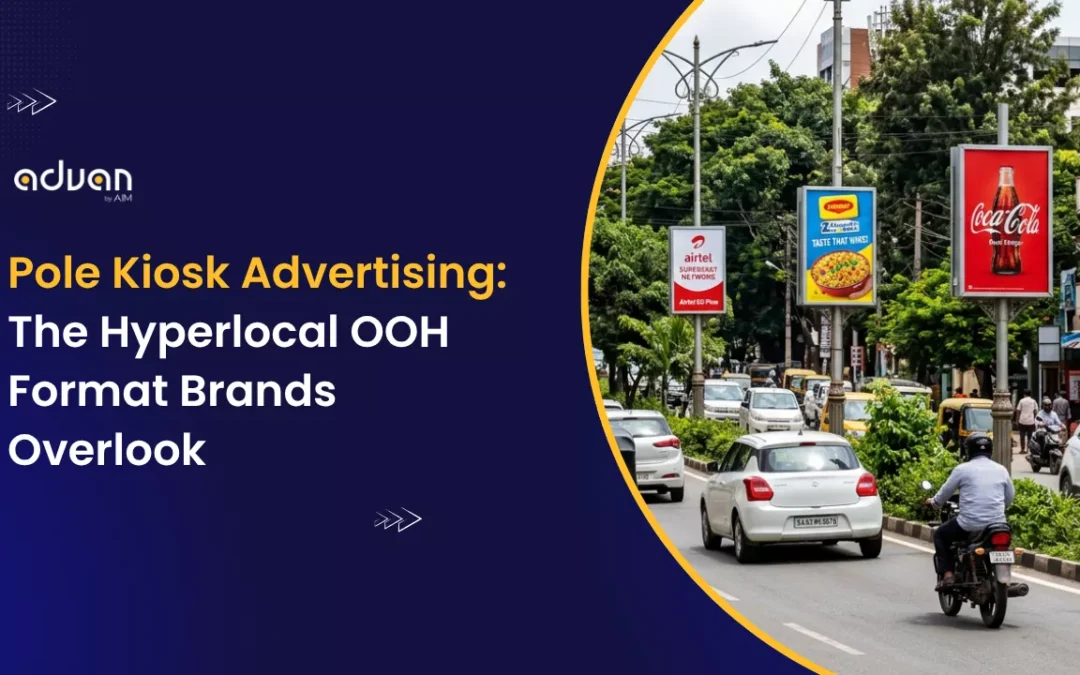
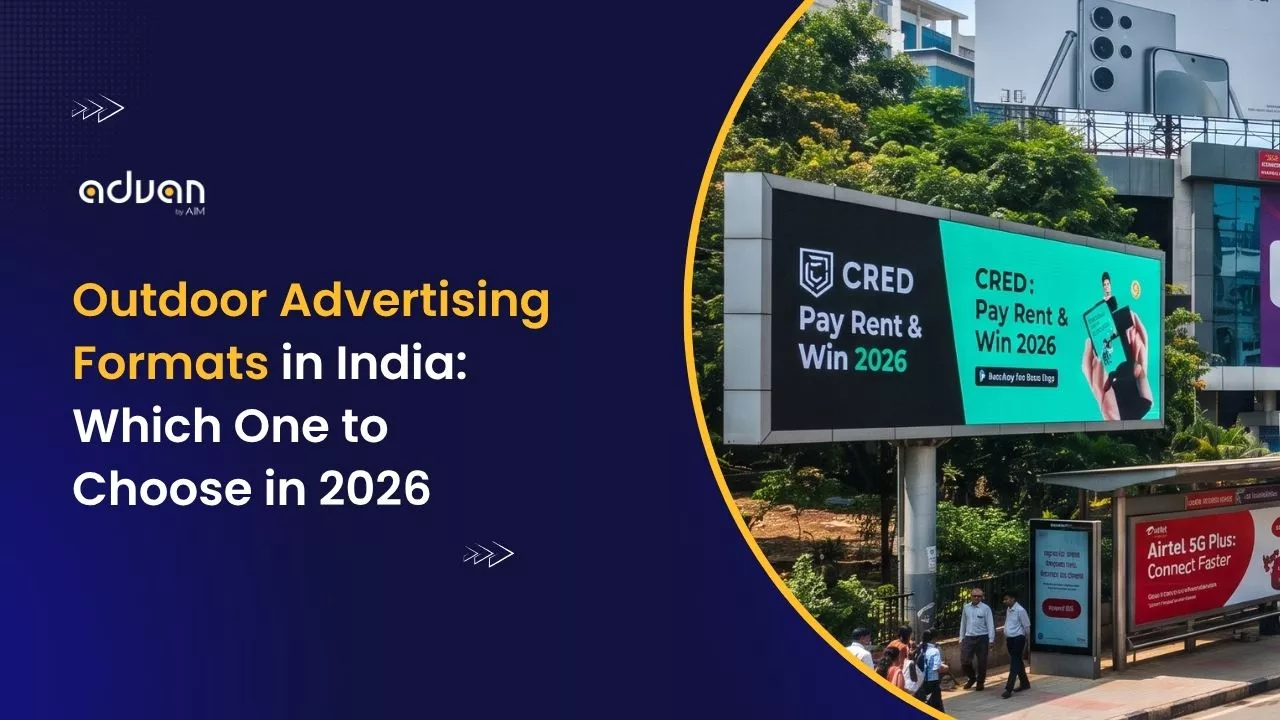
If you want one honest answer: there is no single best outdoor format, only the right one for the job. A hoarding buys you stature. Transit buys you frequency. A bus shelter buys you a few seconds of real attention. Digital out-of-home buys you flexibility. Airport media buys you an affluent, captive audience. The trick is matching the format to what you actually need, not to the photo that looked good on the drive to work.
Most brands pick a format because they saw a competitor on it, then wonder why it did not move anything. So before you sign for a site, here is how the main formats really compare, and how to choose between them.
Outdoor advertising formats in India, compared
| Format | How it reaches people | Cost level | Creative flexibility | Best for |
|---|---|---|---|---|
| Hoardings and billboards | Fixed, large, landmark | Entry to premium | Low, static print | Stature and always-on presence on key routes |
| Transit (bus, metro, auto, cab, train) | Moving, repeated, city-wide | Low to premium | Low to medium | Frequency and mass daily reach |
| Bus shelters | Eye-level, at rest | Medium | Low | A few seconds of real attention at stops |
| Digital OOH (DOOH) | Dynamic, changeable | Medium to high | High, swap and schedule | Flexible creative, offers, multiple messages |
| Airport and airline | Premium, high dwell | Premium | Medium | Affluent, captive, high-value audiences |
For what each of these actually costs, see the outdoor advertising cost guide. This page is about choosing between them.
Key insight: Outdoor formats are not better or worse than each other. They are different tools. A hoarding and a fleet of branded autos can cost about the same and do opposite jobs: one plants a landmark, the other follows people around the city all day.
Choose by the job you need done
Choose hoardings and billboards if you want stature and a landmark. Nothing says a brand has arrived like a big board on a raasta the whole city drives. They are the classic choice for launches and for owning a stretch of road over months. The trade-off is they are static, and the best sites cost the most, because location does the work.
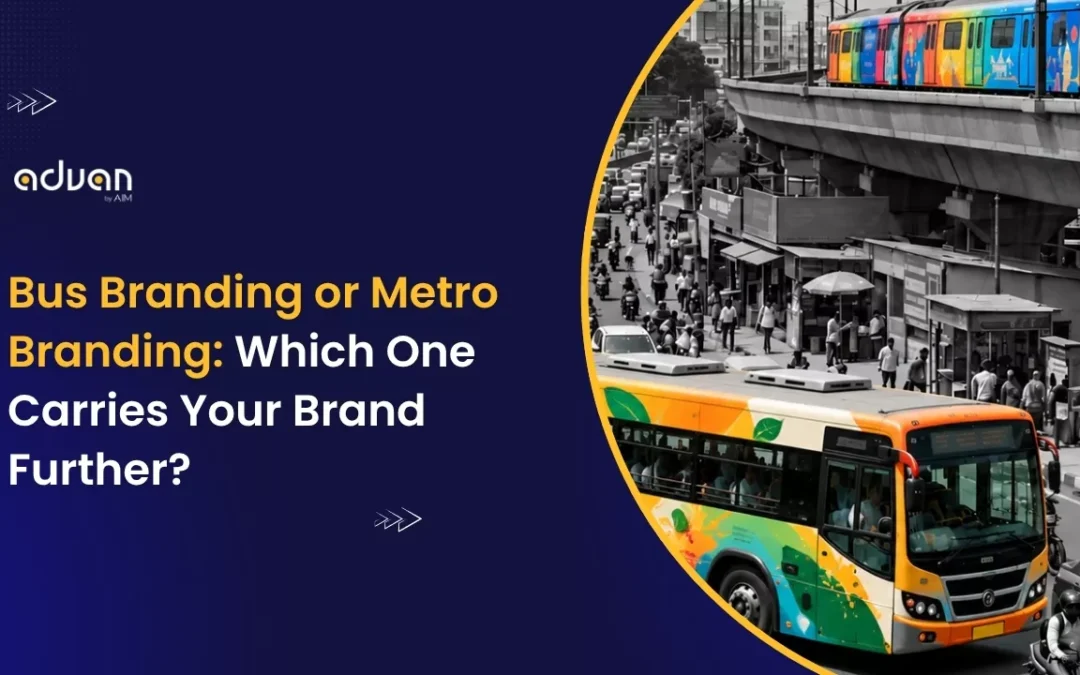
Choose transit if you want frequency and movement. Buses, metros, autos, cabs and trains carry your brand past the same people again and again, across neighbourhoods a single board never touches. Autos start low and go everywhere, into every gully a hoarding will never reach. Metro and airport sit at the premium end. This is reach that moves.
Choose bus shelters if you want eye-level attention at a rest point. People waiting for a bus actually read what is in front of them, which makes shelters strong for a clear offer or a local message in a chosen area.
Choose digital OOH if you want flexibility. DOOH lets you change creative, run several messages, and schedule by time of day, so a coffee brand can push mornings and a food brand can push evenings on the same screen. You pay for that flexibility, but you also stop being stuck with one printed message for a month.
Choose airport and airline media if you want an affluent, captive audience. Travellers have time, attention and money, and the setting rubs off on the brand. It is premium, and it is the right premium when your buyer is flying.
How to actually decide
Start with the outcome, not the format. Awareness across a city, footfall to one new store, and recall along a single route are three different jobs. A launch wants a hoarding plus transit. A new store wants nearby shelters, autos and local boards. A citywide push wants a moving transit layer under a few landmark sites.
Then blend, do not bet everything on one. The strongest outdoor plans usually pair one high-impact format with one high-frequency one. A single hoarding says you are here. A fleet of branded autos around it makes sure people see you more than once. Together they beat either one alone at the same budget.
We saw this play out with TVS Credit in Chennai. They were opening five branches at once in crowded micro-markets where nobody knew the name yet. One format alone would have drowned in the bheed. So we ran a mix: auto-rickshaw hood branding and newspaper inserts for neighbourhood presence, then lookwalkers and a mobile van for engagement. Within days all five areas hit saturation-level visibility, and walk-ins picked up, especially after the van rolled in. That is the surround effect. One touchpoint says you exist. The third one gets someone to actually walk in.
And decide how you will measure before you buy. Even outdoor can be checked: proof-of-display photos, footfall near a store, scan-throughs from a QR on the creative, or a lift in searches for your brand in that city. A format you cannot check is a format you cannot defend next quarter.
At advan by AIM, we plan the format mix, book the sites, run the on-ground work, and send back proof it went live. The point of outdoor was never a board on a map. It is visibility that turns into trials, into trust, into sales.
Frequently asked questions
What is the best outdoor advertising format in India?
There is no single best format. Hoardings win on stature, transit wins on frequency and movement, bus shelters win on eye-level attention, digital OOH wins on flexibility, and airport media wins on reaching affluent audiences. The best choice is the one that matches your goal, budget and city, not the biggest or the cheapest.
Hoardings vs transit advertising: which is better?
They do different jobs. A hoarding is a fixed landmark that builds stature on one route. Transit (buses, metro, autos, cabs) is moving reach that follows people across the city and repeats the message. For a launch, many brands use both: a hoarding for presence and transit for frequency.
Is digital OOH (DOOH) better than traditional hoardings?
Not better, different. DOOH lets you change creative, schedule by time of day and run several messages, which suits offers and fast-moving campaigns. Traditional hoardings are static but often larger, more permanent and strong for long-run stature. Many campaigns use both, digital for flexibility and print for a landmark.
Which outdoor format is the cheapest in India?
Auto-rickshaw branding is usually the most budget-friendly, starting from about Rs 300 for a single branded auto, and it is a one-time cost. Newspaper inserts and cab branding are also low-cost. These trade the stature of a large hoarding for high frequency and wide street-level coverage.
What is the best outdoor format for a product launch?
A launch usually wants impact plus frequency. Pair a hoarding or two on key routes for stature with a transit layer, buses or a fleet of autos, so the same audience sees you repeatedly. Add digital OOH if you want to refresh the message or push a launch offer during the window.
How do I choose the right OOH format?
Start from the goal, not the format. Match awareness, footfall or recall to the format that delivers it, pick a realistic city or radius, then blend one high-impact format with one high-frequency one. Decide how you will measure it before you buy, so you can prove what worked.
Get a format plan for your city
The right mix depends on your goal, your city, and the sites open this month. Tell advan by AIM what you want the campaign to do and where, and namma team will build you a format plan with live, site-specific options and an indicative budget. Then you are choosing outdoor on the job to be done, not on guesswork.