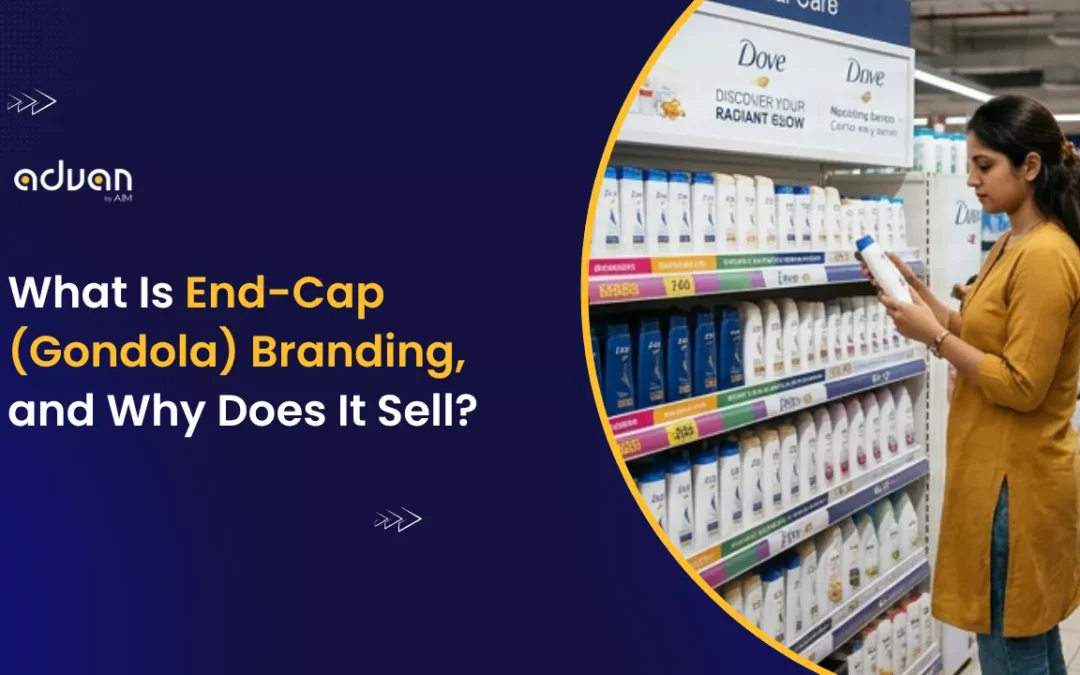

Stand in any supermarket aisle for ten minutes and watch what people actually do. They walk in with a rough idea, maybe a brand in mind, maybe just a category. Then they reach the shelf, and something happens in the space of a breath. A hand hovers. Eyes scan left to right. One pack gets picked up, another gets put back, and a third never gets seen at all. That moment, right there at the shelf, is where most of the real buying decision gets made. Not in the ad. Not on the website. At the shelf, with a trolley to fill and not much time to think.
This is the point of decision, and your retail branding is the only salesperson you have standing there. It is either helping the shopper choose you, or it is quietly losing to the pack next to it. There is rarely a middle.
What is the point of decision in retail?
The point of decision is the exact moment and place where a shopper commits to one product over the others. In most everyday categories, that happens in the store, at the shelf, in the last few seconds before a hand closes around a pack. People change their minds here all the time. They walk in loyal to one brand and walk out with another, because the other one caught them at the shelf and the first one did not.
That is worth sitting with for a second. A brand can win the ad, win the recall, even win the shopping list, and still lose at the shelf. All the money spent getting the customer into the store is riding on what happens in those final seconds. Retail branding is what works that moment on your behalf, when nobody from your team is standing there to help.
Why does retail branding win or lose right there?
Because the shopper is not studying your shelf. They are glancing at it. You have a few seconds, and in those seconds the brain is not reading, it is sorting. It is looking for something familiar, something clear, something that matches whatever brought them down the aisle. Your branding either makes that easy or it makes them work, and a shopper with a full trolley will not work. They will take the easy pick and move on.
So the win is not about being the prettiest thing on the shelf. It is about being the clearest thing in the glance. The brand that is instantly legible, instantly recognisable, and instantly obvious about what it is, tends to win the hand. The brand that looks clever but takes a second read to understand loses, because it never gets the second read.
What makes retail branding win the moment?
A few things separate branding that closes the sale from branding that just sits there looking nice.
Clarity before beauty
The shopper should know what the product is, who it is for, and why it is different, in one glance. If your pack or your shelf strip needs a paragraph to explain itself, it has already lost the shopper who was moving fast. Say one thing, clearly, and let it land.
Visibility at eye level
Where your branding sits on the shelf decides whether it gets seen at all. Eye level and the level just below it do most of the work. A beautiful design placed at ankle height is a beautiful design nobody looks at. Placement is half the battle, and it is the half most brands leave to chance.
A clear hierarchy
The eye needs somewhere to land first, then second, then third. Brand, then benefit, then detail. When everything on the pack shouts at the same volume, nothing gets heard. The strongest retail branding leads the eye in order instead of leaving it to fight through noise.
Consistency with what brought them in
If your ad, your offer, or your online presence promised one look and one message, the shelf has to match it. A shopper who saw a bright, simple campaign and then finds a busy, different-looking pack feels a small disconnect, and doubt is enough to make a hand hesitate. Match the shelf to the promise that sent them there.
Upkeep
Branding that is torn, faded, or half-fallen does more harm than no branding at all. It tells the shopper the brand does not care, and a brand that does not care about its own shelf is easy to walk past. Fresh, intact, and correctly placed is a message in itself.
What makes retail branding lose the moment?
The losses are usually self-inflicted, and they repeat across brand after brand. Clutter is the biggest one. A shelf strip or a pack trying to say five things says nothing, because the shopper’s glance cannot hold five things. Then there is vanity design, branding built to win an award or please the marketing team rather than to be understood at arm’s length in bad store lighting. It looks great in the deck and disappears on the shelf.
Placement mistakes lose the moment quietly. The branding is fine, but it is in the wrong aisle, at the wrong height, or facing the wrong way, so the buyer never meets it. Message mismatch loses it too, when the shelf says something different from the campaign that pulled the shopper in. And the slow, invisible loss is neglect, the store branding that went up six months ago and has been fading and peeling ever since while everyone assumed it was still doing its job.
A moment from the aisle
Here is the kind of thing that happens more than brands would like to admit. A brand runs a sharp, clean campaign, gets the shopper genuinely interested, and drives them to the store. The shopper reaches the aisle looking for that clean, confident brand they just saw. What they find is a pack crowded with claims, a shelf strip curling at the edges, and a competitor next to it that is simple, bright, and easy to read. The shopper does not consciously decide anything. They just pick the one that felt easier. The first brand paid for everything up to that shelf and lost the sale in the last two seconds, to branding, not to product.
That is the hard truth of retail. The buyer at the shelf is not comparing quality. They are comparing what they can understand quickly. Good retail branding makes your product the easy one to understand.
How do you know if your retail branding is working?
You do not have to guess. The point of decision can be watched and measured, and honestly, most brands skip this part. Start by comparing offtake in stores that carry your branding against similar stores that do not. If the branded stores move more units, the branding is doing its job. If they do not, something at the shelf is failing, and no amount of design awards will fix it.
Then go and watch. Spend time in the aisle and see where shoppers’ eyes go, what they pick up, what they put back, and where your pack sits in that sequence. Run store audits so you know your branding is actually up, intact, and correctly placed, because a surprising amount of retail branding is paid for and never properly deployed. The brand that treats the shelf as something to measure, rather than something to decorate, is the brand that keeps winning that final moment.
The point of decision is yours to win
Everything upstream, the ad, the offer, the trip to the store, exists to deliver the shopper to the shelf. What happens next is decided by whether your branding wins the glance. Make it clear, put it where the eye lands, match it to the promise that brought them in, and keep it fresh. Do that and the shelf starts working for you, quietly, every hour the store is open. Skip it and you are paying to bring shoppers to a moment your competitor is set up to win. The aisle is the last room in the sale. It is worth walking into it and asking, honestly, whether your brand is the easy pick or the one that gets put back.
Frequently Asked Questions
What is point-of-decision branding in retail?
It is the branding a shopper meets at the shelf or in the store, at the moment they choose one product over another. Packaging, shelf strips, danglers, gondola branding, and in-store displays all work this moment. It matters because most everyday category decisions get made or changed inside the store, not before it.
How much time does retail branding have to catch a shopper?
Only a few seconds per shelf. A shopper scans rather than reads, so the branding has to be understood at a glance. Anything that needs a second, closer look usually does not get one.
Does retail branding actually increase sales?
It can, when it is clear, well placed, and consistent with the planning of an experienced retail branding agency. The honest way to know is to compare sales in stores that carry your branding against similar stores that do not. If the branded stores move more, the branding is earning its place. If not, the shelf needs fixing.
What is the most common retail branding mistake at the shelf?
Clutter. Trying to say too many things at once, so the shopper’s quick glance catches nothing. A close second is neglect, leaving faded or damaged branding up long after it has stopped helping.
How do I measure whether my retail branding is working?
Three ways together. Compare offtake in branded versus unbranded stores, run store audits to confirm the branding is actually up and intact, and spend time watching shoppers in the aisle to see what they notice and pick. Treat the shelf as something to measure, rather than something to decorate.